In linear algebra, we study vectors in some space Rn. Linear transformation is defined on Rn. For v,u∈Rn, and c∈R, a linear transformation T:Rn→Rn satisfies
T(v+u)=T(v)+T(u)
T(cv)=cT(v)
However, the "linear thing" is not limited to vectors. As an illustration, note that a vector
v=v1v2...vn
can be viewed as the image of some function f:{1,2,...,n}→R, such that f(i)=vi. It is natural to study the functions {I→R}, where I⊂R is some open interval. For any x∈I, f(x) gives the value of x. The only difference with vectors is that, it not possible to enumerate all value of x∈I. Instead, we specify a rule of obtaining the value at x.
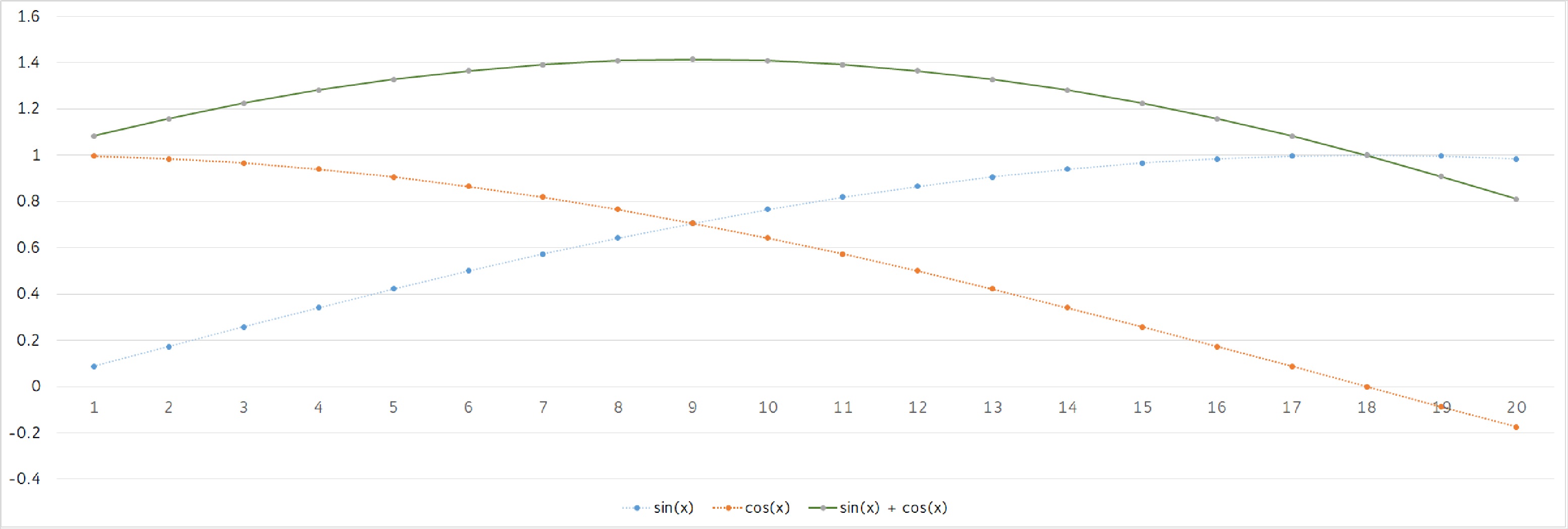
For any two functions f1,f2:I→R, we can add them together and obtain a new function f1+f2:I→R. Addition is closed in the space {I→R}. Then for x∈I,
(f1+f2)(x)=f1(x)+f2(x)
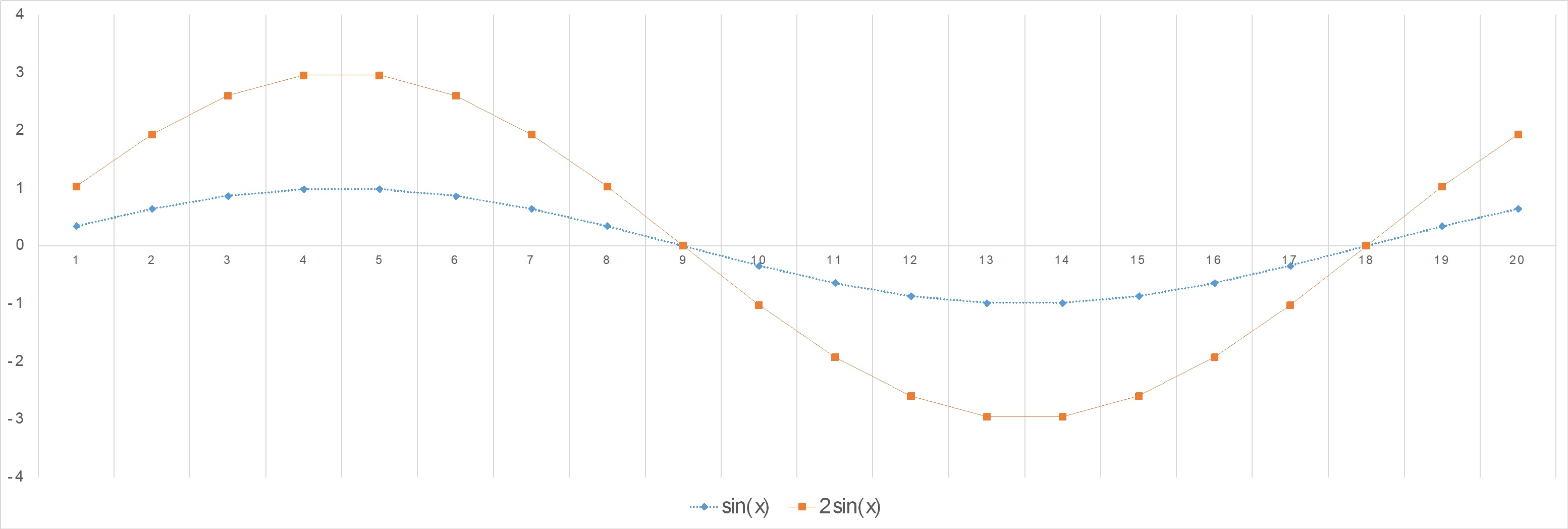
which is similar to that adding up coordinates of two vector. We can also define multiplication: for c∈Rn, f:I→R, cf is a function in {I→R} such that
(cf)(x)=cf(x)
Multiplication is closed in the space {I→R}.
Example. The derivative operation T:{f:I→R∧differentiable}→{I→R} is linear transformation. It is easy to verify for differentiable functions f1,f2∈I→R, and c∈R, we have
(f1+f2)′=f1′+f2′
(cf1)′=cf1′
What is more, we can extend some other concepts in linear algebra. In linear algebra, "eigenvector" is a vector whose direction does not change under a linear transformation. For derivative operation, the function ex is un-changed after the transformation: